


New to the story or need a refresher? Begin with the prologue:

Jaden had been carrying his mother for two days.
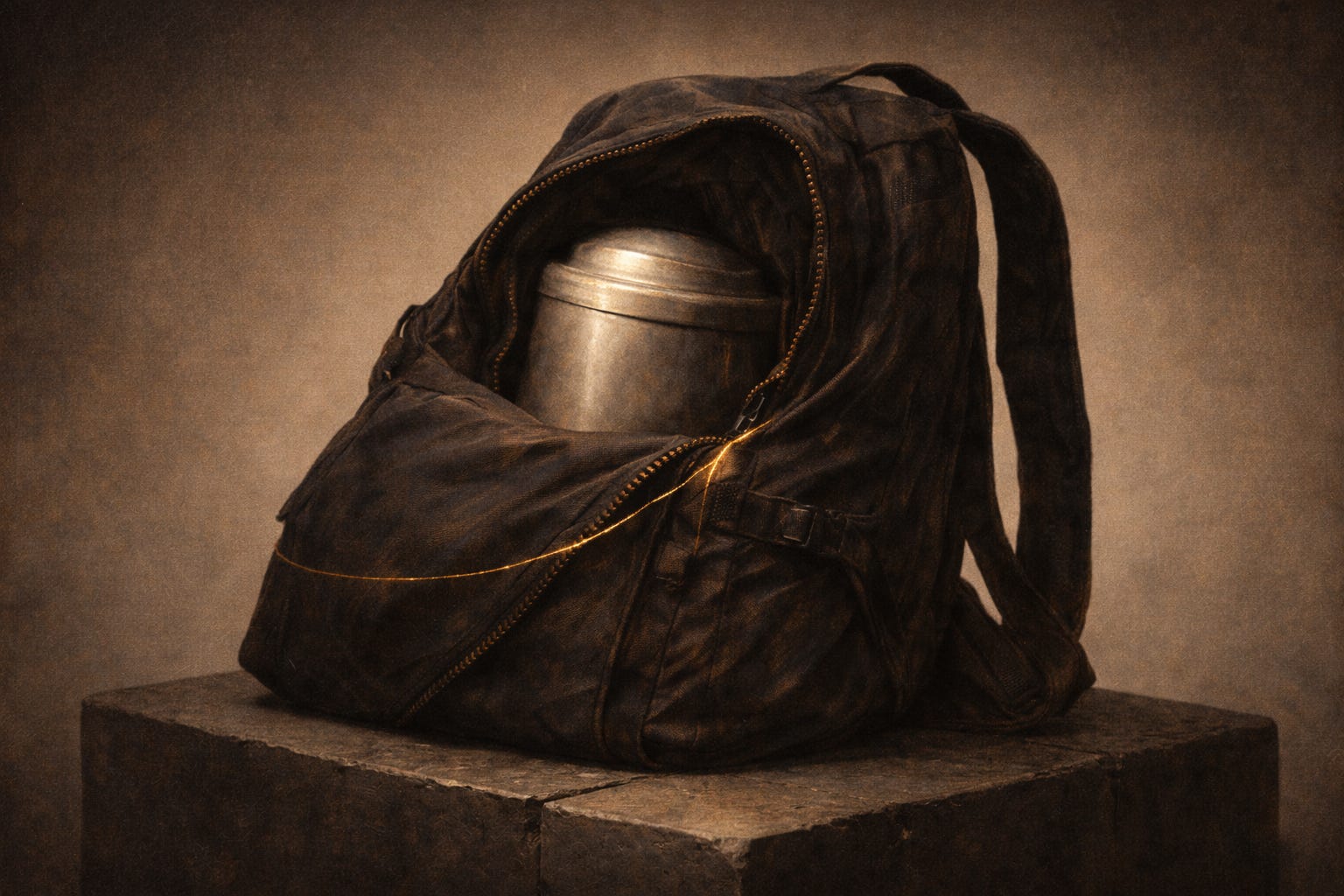
Not all of her. Just what was left after the fire and the paperwork and the quiet, efficient way the funeral home reduced people to manageable portions. The ashes sat in a sealed travel container inside his backpack, wedged between a folded jacket and his camera.
The train slowed, stopped, and sighed open.
Amsterdam Centraal Station exhaled him into noise, and Jaden followed the current of bodies onto the platform. He stood there for a second too long, disoriented by the vast arch of steel ribs and glass panes overhead. Sunlight diffused into pale bands that made the air feel structured, measured. The station was alive with momentum, and everything moved with purpose. Commuters folded into lanes, tourists stalled and recalibrated.
Jaden adjusted the straps of his backpack and made his way to the station’s exit as English announcements stacked after Dutch ones. The gates stood in a row, each with a ticket scanner and waist-high glass barriers. People tapped, the gates parted, people flowed through. Efficient. Impersonal. Exactly the kind of system he needed today—no conversation needed.
He tapped his ticket against the yellow scanner.
The scanner beeped. Green light.
Except the gate didn’t open.
Behind him, someone cleared their throat and went to the next barrier.
“Sorry,” Jaden muttered, already stepping aside, heat rising in his face. He checked the ticket. It was still valid.
The next person scanned their ticket, and the gate opened obediently for them.
Jaden tried again, angling the ticket differently. This time the scanner hesitated, then beeped as if it had finally made up its mind. The light flashed green with more confidence than before.
The gate remained stubbornly shut.
“Of course,” Jaden said.
A station employee approached, a woman in a navy jacket with a name tag he couldn’t pronounce. She gestured toward the barrier and spoke in Dutch. “Werkt het niet?”
Jaden blinked at her, then held up his ticket.
She switched to English without missing a beat. “Is it not working?”
“It says it is,” Jaden replied and passed the ticket to her. “But it’s…not.”
She gave him the practiced smile of someone whose job came with years of dealing with travelers who didn’t know how anything worked. When she leaned in and scanned the ticket herself, the scanner chirped. Green. She glanced at the gate, then at the scanner, then back at the still gate like she expected it to apologize.
“That is strange,” she said.
She opened the access panel and did something Jaden couldn’t see. The gate flickered and powered down. As it powered back up, the glass panels shivered and reset.
She tried again, slower this time, as if careful handling might coax cooperation.
Still wouldn’t open.
She straightened and looked at Jaden properly for the first time.
There was nothing remarkable about him. He knew that he must’ve looked like the hundreds of other men passing through the station. Sure, maybe he had tired eyes and shoulders hunched from lack of sleep on the transatlantic flight. He met her gaze, waiting for the questions he expected in a moment like this.
Where are you going?
Why are you here?
What’s in the bag?
She didn’t ask.
Instead, she exhaled, sharp and uncertain, and gestured toward a narrow service gate at the far end of the row.
“Just go through there,” she said. “It’s fine.”
“Are you sure?” Jaden asked.
“Yes.” There was something in her voice that sounded like relief.
He didn’t see a reason to argue.
The service gate opened manually, squealing slightly in protest, and Jaden stepped through. On the other side, the rest of the station resumed its rhythm like nothing had happened. The woman had already turned away, watching other passengers pass cleanly through the same gate, pursing her lips as if daring it to misbehave again.
Jaden didn’t linger on it. Approval without access was something he’d seen before.
Outside, Amsterdam was gray and bright at the same time. The air smelled like water and metal and something fried. Jaden stopped near the train station’s entrance, taking in the rush of people shuffling past, the trams clanging their way through intersections. Different languages he didn’t speak braided around him in quick, confident syllables.
He set his backpack down and unzipped it just enough to check.
The container was still there.
“I told you I’d bring you here,” he said under his breath.
He didn’t linger over the words. Didn’t need to. He slid the zipper the rest of the way open and pulled the camera free almost without thought. The strap settled around his neck with old familiarity, the weight grounded him.
When he was nine, Jaden had vowed to take his mother on a trip someday. She had laughed at him for it, the sound brittle with disbelief. On the plane ride over, he’d savored the thought of fulfilling that boyish pledge—a warm pat on the back, a “well done” echoing from his younger self to the man he had become.
But as he walked past the trams, his suitcase dutifully rattling behind him, the truth made something heavy settle in his chest: technically, he was too late.
Still, he could imagine his mom here, balking at the city’s unfamiliar rhythm. As if carved from living stone, her stoic gaze would ask him a total of one question: “How long we gon’ stay here?”
And he wouldn’t know how to answer. Not because he lacked the words, but because they hadn’t practiced speaking to each other in years, their last conversation a dusty, forgotten relic, a token of the silence they had let grow between them.
The city distracted him before he could dive into all the conversations that never happened. On his way to his hotel, Amsterdam eased toward the evening, the clouds breaking to spill a golden light over a row of those stately, iconic canal homes.
Jaden was instantly smitten.
They looked so prim and proper that it made something in him itch; he almost wanted to shrink the houses down and keep them on a shelf somewhere. Just so he could look at them up close and ask what they were trying so hard to prove.
His camera, faithful co-conspirator, was ready. He lifted it and focused his lens on a woman standing alone on her balcony, one hand resting lightly along the iron railing that ended in a carved flourish—some old decorative detail shaped vaguely like an owl’s face. She gazed coolly at the world below her perch, as though she were weighing it.
Each snapshot pulled him into the moment. His heartbeat matched the click of the shutter, the small alchemy of film. For a moment, he was not just a man carrying ashes; he was Jaden, the observer, the chronicler, the artist with the ability to stop time.
Through a lens, the world behaved. It framed itself and stayed where he put it.
Chasing a better angle, he stepped onto a strip of red pavement, what looked like an extended sidewalk.
The cyclist appeared as if summoned from thin air.
There was a flash of gold at the edge of his vision and then—
Nothing. Darkness.

I heard all this later, of course.
Apollo told it badly. He skipped over the hesitation thinking, I wouldn’t catch the fraction of a second where he should have kept riding and didn’t. Instead, he jumped straight to the spectacle afterward: the pop, like from those vintage camera flashbulbs, and how the god of light, his celestial VanMoof bicycle, and Jaden vanished from the street.
Once, in a time now shadowed by centuries, the old Apollo would have easily left Jaden to suffer. The god’s tempestuous youth was littered with death—warriors felled by his plagues, beasts vanquished by his bow. Not to mention all those tragic love affairs. But those days were now mere echoes in his immortality.
I mean, you’ve seen firsthand how many of us gods have softened over the ages, as my father likes to point out, rather yell unrestrainedly at us, during our rare family gatherings. To him, erosion is a moral failure.
But times change. Even for us.
And these days, Apollo says his prophecies arrive less like technicolor revelations and more like a misstep. Like reaching for the last stair only to find air.
He felt that, apparently.
Not in the collision.
Not in the body sprawled unconscious on the bike lane.
In the pause before it.
Apollo claims curiosity made him turn back. That something about the young man tugged at him. Even banged up, Jaden had a certain kind of gravity, a smoldering presence beneath his pecan-brown skin that resisted immediate categorization.
When Apollo dropped by our party, ambrosia staining his confession and this story spilling out of him in uneven bursts, he admitted something else.
It had been a long time since a mortal surprised him.
What unsettled me wasn’t that Apollo intervened. It was that something had stalled before he did. The ticket scanned. The gate approved.
And yet the world hesitated.
Spend enough centuries amongst gods and you learn to recognize moments like that. It is never the thunder that matters so much as the air right before the lightning strikes.
Wonderful thank you! I felt totally transported there!
Good first chapter, man. Looking forward for number two.